

 Capital: Zagreb
 Population: 3.87 million (2025, Eurostat)
 GDP: €85,9 million Euro (2024, Eurostat)
- GDP/capita: €22 200 (2024, Eurostat)
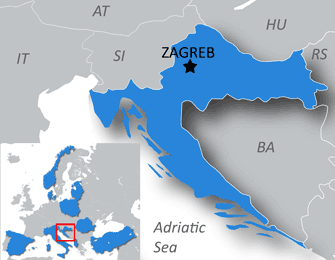
Overview of the Croatian fisheries and aquaculture sector




Marine fisheries
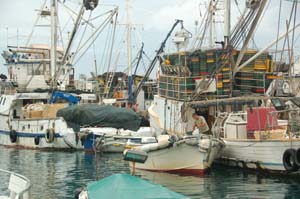
With a sea surface of 31 067 km², 1 242 islands, islets, and reefs, totalling 6,278 km of coastline, Croatia has a long tradition in fisheries which provide a source of income throughout the year for coastal and island communities. In addition to being a source of supply of healthy food, fisheries add value to vibrant coastal tourism.
There are two main types of capture fishery at sea in the Republic of Croatia, commercial and non-commercial. Commercial fishery encompasses large-scale fishery and small-scale coastal fishery, which is limited in terms of gears as well as manner of operation. Non-commercial fishery at sea includes sport and recreational fishing.
More than 45% of Croatia’s fishing vessels are registered as multipurpose vessels that use different gear over the course of the year. The catches are primarily small pelagic species (over 90% of the volumes), where sardine and anchovy are the major species. The remaining catch is split between other fish, bivalves, crustaceans, and cephalopods.
In 2024, Croatia had 6.172 vessels in its commercial fishing fleet, of which 6.047 were active. Of those, small-scale coastal fishing vessels less than 12 metres represented 87% (5.261 vessels). However, the largest percentage of catches in landed volume (89%) are made by purse-seines that target small pelagic fish (European pilchard and European sardine) and bluefin tuna, representing 2% of total fishing vessels. Bottom trawlers, demersal seiners, and dredges account for 5% of the active fleet.
In 2023, there were 8.987 people employed in the marine fishing sector, of which 3.201 were FTEs. The total landings of fisheries products in Croatia reached 55.190 tonnes. According to the EU Master Data Register (2024), there are 274 landing places in the country. The most important landing places for small pelagic species are Kali, Zadar, Biograd na moru, and Pula. For demersal catches locations are Mali Lošinj, Tribunj and Zadar.
Inland fisheries
The two categories of fishing in freshwater (inland) are commercial and sport-recreational. The management of inland waters is the responsibility of fishing rights holders, mostly associations, covering management elements such as fishing rights, permits, control, and stocking surveillance.
In Croatia, most of the natural lakes are state-owned, while out of the 21.000 km of rivers and creeks, 4.000 km are state waters and 17.000 km are local waters. All of the state-owned rivers are available for recreational fishing, while commercial fishing is allowed only in the Danube River and lower parts of the Sava River. Commercial inland fisheries have low economic value and a small impact on the economy.
The most caught species include common carp, other cyprinid species, wels catfish, pike, and pikeperch. Commercial fisheries in natural waters will gradually be replaced by recreational fisheries, as it has been difficult to find waters for commercial fishing.
Aquaculture

Croatia’s coastal areas and inland waters have favourable conditions for aquaculture development. The country pioneered commercial marine aquaculture with one of the first and largest hatcheries for European sea bass in the early 1980s.
Marine aquaculture production includes farming of finfish and shellfish amounted to 23.183 tonnes in 2023. Finfish farming involves a closed farming cycle (with the exception Atlantic bluefin tuna), where the first phases take place in a hatchery, and then moves to floating cages at sea. The largest number of farms for marine fish are in Zadar region. The most important species are gilthead seabream (Sparus aurata) with 38% of the total marine aquaculture production, followed by European seabass (Dicentrarchus labrax) aurata) with 37%.
Atlantic bluefin tuna (Thunnus thynnus) represents a different type of activity, as it is about ranching more than farming: wild caught specimens of 8–10 kg in size are grown to market size of 30 kg and larger for sale, mainly to the Japanese market. In 2023 the volumes of Atlantic bluefin tuna represented over 14% of the volume of marine aquaculture production. In 1996, Croatian producers were among the first in the world who started aquaculture of Atlantic bluefin tuna in the Mediterranean.
The most important shellfish species are farmed Mediterranean mussel (Mytilus galloprovincialis) and European flat oyster (Ostrea edulis). Total shellfish production in 2023 reached 1.031 tonnes of which 938 tonnes belonged to Mediterranean mussel.
The farming of freshwater fish species (3.677 tonnes in 2023) is divided between farming of warm-water species (cyprinids) and farming of cold-water species (salmonids). The most important species in freshwater farming are common carp (Cyprinus carpio) and rainbow trout (Oncorhynchus mykiss). Carp is traditionally farmed in the region of Slavonia, the lowland part of Eastern Croatia. Common carp represented 62% (2 294 tonnes) of the total national carp production, whereas the rest was made up by bighead carp (Hypophthalmichthys nobilis), grass carp (Ctenopharyngodon idella), and silver carp (Hypophthalmichthys molitrix). Trout production reached 438 tonnes or 12% of the total freshwater aquaculture volumes. The freshwater aquaculture production is mostly sold on the national market, but also to the EU market. The farms are mostly microscale enterprises, particularly family-owned farms.
Although domestic freshwater aquaculture represents a relatively small part of the fisheries and aquaculture sector’s economy, it has the potential to boost development and jobs in the inland and rural areas of the country. The freshwater aquaculture sector is very important for the maintenance and conservation of biological diversity and supporting the local community.
Processing

The fish processing industry is situated in coastal and rural area. In 2023, a total of 49 enterprises employed about 1.287 people. Important products are frozen fish, canned fish (anchovies, sardines, large pelagic fish), dried, salted, or filleted fish (mostly sea bass and sea bream as well as from small pelagics). Smoked and marinated products are also produced in small quantities. The total turnover of processed products reached € 120,3 million.
Trade
Fisheries is an important element of the overall export of agricultural products for the Republic of Croatia. In 2023, the country was a net exporter of fish and seafood products. Japan is the most important destination for bluefin tuna (14% of the value in 2022), while within the EU, Italy (29%), Spain (12%), and Slovenia (9%) are the main export destinations for fresh and salted fishery products. Demersal fish and cephalopods are exported fresh mainly to Italy. Export of fisheries and aquaculture products in 2023 amounted to € 364,9 million and 73.758 tonnes. In 2023, imports of fisheries and aquaculture products amounted to € 283,2 million and 67.302 tonnes in 2023 and originated mainly from Spain (25% in value), Italy (21%), the Netherlands (9%), and Slovenia (9%).
Consumption
The study of the consumption of fishery and aquaculture products in Croatia, conducted by the Directorate of Fisheries of the Ministry of Agriculture, reveals that in 2023 per capita consumption amounted to 22,96 kg. Regarding the fisheries and aquaculture consumption of species or groups of organisms in Croatia, the largest volume relates to marine fish, primarily wild-caught followed by farmed fish. This mainly includes small pelagic fish, cephalopods (squid, cuttlefish, octopus), and demersal species such as hake, cod, flatfish, and other types of white marine fish (seabass, gilthead seabream, etc.), while freshwater fish hold a low position in overall availability and consumption.
Useful Links for Croatia
- Government of the Republic of Croatia
- Directorate of Fisheries of the Ministry of Agriculture
- Croatian Bureau of Statistics